Center for Tropical Virology, Recombinant Vaccines & Structural Biology

Engineering Proteins to Unravel Viral Immunity & Advance Next-Generation Vaccines

The Molecular Structure and Immunology (MSI) Lab at the University of Chittagong combines structural protein engineering, peptide tag chemistry, and immunological evaluation to address major viral health challenges.

From Atomic Structure to Population Protection: Innovations in Dengue and SARS-CoV-2 Immunology
Explore Publications Meet Our People Student & Fellow Recruitment
Affiliated Institutions & Strategic Sponsors:
University of Chittagong University of Chittagong
HEAT Project HEAT Project

World Bank World Bank
UGC Bangladesh UGC Bangladesh
Govt. of Bangladesh Govt. of Bangladesh
Chittagong Medical College & Hospital Chittagong Medical College & Hospital

Chittagong Ma-O-Shishu Hospital Chittagong Ma-O-Shishu Hospital
Bench-Verified Milestones

Key Research Metrics & Scientific Impact

Molecular Structure & Immunology Laboratory · CU
25+
Completed Theses & Dissertations
MS, PhD & post-doctoral researchers trained in structural biology & virology
4
Dengue Serotypes (DENV 1–4) Targeted
Epitope grafting & envelope domain III (ED3) serospecificity dissection
3+
SARS-CoV-2 Variants Evaluated
Wuhan, Omicron (BA.4/5, JN.1) RBD IgG titers & cross-reactivity mapping
2
Patented/Engineered Tag Technologies
Solubility Enhancing (SEP) & Solubility Controlling (SCP) peptide tags
15+ Years
Dedicated Research Leadership
Continuous molecular biophysics and infectious disease investigation
100%
Source-Grounded Structural Insights
Empirical biophysical validation via HPLC, MS, ELISA, and docking
Multiple
Regional Cohort Serosurveys
Translational clinical epidemiology & Sinopharm booster evaluations in Chattogram
10+
National & Int. Collaborations
TUAT Tokyo, World Bank HEAT, CMCH, CMOSH, and Govt. research grants
Laboratory Leadership

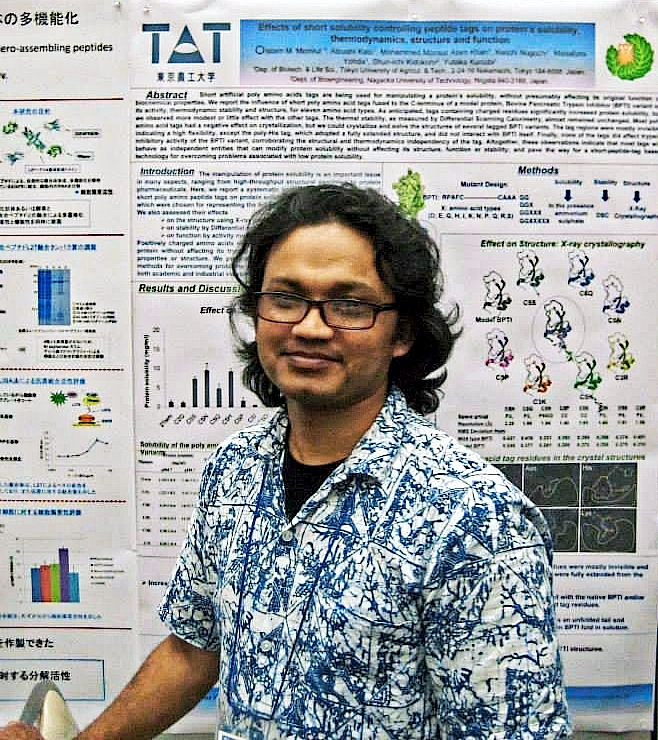
Prof. Dr. Mohammad Monirul Islam

Head of MSI Lab · Professor, Department of Biochemistry & Molecular Biology · University of Chittagong

Explore All Team Members & Alumni →
Prof. Dr. Mohammad Monirul Islam
TUAT Tokyo Ph.D. under Prof. Yutaka Kuroda
islammm@cu.ac.bd
+8801750180422
Laboratory Vision & Identity

“The Molecular Structure and Immunology Laboratory (MSI Lab) is a flagship research facility situated within the Department of Biochemistry and Molecular Biology at the University of Chittagong. Under the leadership of Professor Dr. M. Monirul Islam, the MSI Lab dedicatedly pursues fundamental and applied questions at the intersection of protein chemistry, structural biophysics, and viral immunology.”

Dr. M. Monirul Islam earned his PhD under Professor Yutaka Kuroda, establishing fundamental principles regarding the structure, folding, and immunogenicity of protein variants. Since establishing the MSI Lab, Dr. Islam has mentored over two dozen postgraduate thesis researchers (MS, PhD, and Post-Doctoral fellows). His pioneering work led to the invention and characterization of SEP-tags and SCP-tags for protein solubilization and controlled immunogenicity, as well as extensive mapping of Dengue domain 3 (ED3) serospecificity and SARS-CoV-2 RBD cross-protection.

During the COVID-19 pandemic, Dr. Islam served as Lab-In-Charge of the University of Chittagong COVID-19 Testing Facility, directing over 100,000 real-time molecular diagnostics. He also heads the Animal Ethics Review Board at the University of Chittagong.

• Head of MSI Lab & Professor, Department of Biochemistry & Molecular Biology, University of Chittagong
• Lab-In-Charge, COVID-19 Testing Lab, Faculty of Biological Sciences, University of Chittagong
• Head, Animal Ethics Review Board, University of Chittagong
• Co-Inventor, Patented Solubility-Controlling Peptide Tags (WO2019031446)
View Full Academic CV & Publications →
Section 1.3 · Official Core Research Pillars

Research Pillars at MSI Lab

Four fundamental pillars guiding viral immunology, tag chemistry, and translational vaccine engineering.

Explore All Research Objectives & Strategic Goals →
Pillar 01 · Structural Virology DENV 1–4

Dengue Envelope Domain III (ED3) Biology

Exploring residue-level determinants of serospecificity and cross-reactivity across all four Dengue serotypes (DENV1–4). The lab utilizes epitope grafting and domain-based constructs to distinguish natural infection antibody profiles from artificial immunization responses.

Residue-Level Determinants & Epitope Grafting
Pillar 02 · Protein Engineering SEP & SCP

Peptide Tag Technology & Protein Solubility

Development and application of Solubility Enhancing Peptide (SEP) tags, Solubility Controlling Peptide (SCP) tags, and poly-amino acid peptide tags (poly-Ile, poly-Asp, poly-Lys). These tags manipulate aggregate sizes, suppress inclusion body misfolding, and modulate antigen immunogenicity in vivo without compromising specificity.

Inclusion Body Suppression & Controlled Aggregation
Pillar 03 · Translational Immunology SARS-CoV-2

SARS-CoV-2 Variant Immunology & Booster Strategies

Profiling cross-reacting IgG antibodies against Wuhan, Omicron (BA.4/5, JN.1), and monovalent/multivalent RBD immunizations. The lab evaluates homologous vs. heterologous vaccine boosting regimens in both animal models and vaccinated human cohorts in Chattogram.

Omicron BA.4/5 & JN.1 · Mix-and-Match Boosters
Pillar 04 · Cellular Memory & mAbs IFN-γ / IL-4

Cellular Immune Memory & Monoclonal Antibodies

Investigating T-cell memory generation, intracellular Th1/Th2 cytokine expression (IFN-γ and IL-4), and developing monoclonal antibodies (mAbs) against Dengue ED3 variants to dissect neutralisation mechanics.

Th1/Th2 Intracellular Cytokines & mAb Neutralization
Section 2.2 · Methodological Rigor

Technical Capabilities & Laboratory Workflow

Integrated bench-to-bedside experimental pipeline: from recombinant construct expression to cellular immunology.

Explore Facilities & Equipment →
STEP 01

Recombinant Protein Expression

Construct design in pET vectors, transformation in E. coli strains (JM109, DH5α, and T7 SHuffle for disulfide bond formation), low-temperature and IPTG induction.

Molecular Construct Design
STEP 02

Inclusion Body Refolding & HPLC

GuHCl denaturation, air oxidation of cysteines, Ni-NTA affinity chromatography, thrombin/CNBr tag cleavage, and Reverse-Phase HPLC (YMC-Pack PROTEIN-RP).

Protein Refolding & Tag Cleavage
STEP 03

Structural Confirmation & Mass Spec

ESI-TOF and MALDI-TOF mass spectrometry, analytical RP-HPLC, Ellman's assay for free thiol quantification, and SDS-PAGE purity validation.

Analytical MS & Thiol Titration
STEP 04

Immunological Assays & Serology

Mice artificial immunization models (Swiss albino), indirect and sandwich ELISA, intracellular cytokine staining (IFN-γ, IL-4), and sensitized lymphocyte cultures.

Humoral & Cellular Memory
STEP 05

Computational Docking & Biophysics

HADDOCK 2.4 molecular docking, PRODIGY binding affinity thermodynamics, and epitope structural modeling in PyMOL and UCSF ChimeraX.

In Silico Interface Mechanics
Open Science & Reproducibility · 11 Verified SOPs

Standard Operating Procedures & Protocol Collections

Standardized, bench-verified protocols developed and utilized by MSI Lab researchers across viral surveillance, clinical serology, in vivo challenge, molecular docking, and phytochemical extractions. Available for open academic download.

Explore All 11 Protocols & SOPs
Virology & Diagnostics DOCX · 26 KB

1-Step RT-qPCR Mastermix & Amplification Protocol

Standard operating procedure for one-step real-time reverse transcription PCR, covering RNase-free glassware preparation, primer-probe mastermix assembly, and thermal cycling parameters for viral pathogen surveillance.

Standard Operating Procedure (SOP) Highlights:
  • ✓ Baking glassware at 180–200°C for ≥4 hours to destroy RNases
  • ✓ TE buffer & DEPC-treated nuclease-free water preparation
  • ✓ Multiplex primer and hydrolysis probe mastermix formulation
  • ✓ qTOWER³ G linear thermal cycling and threshold baseline calibration
Validated Equipment / Platforms:
Analytik Jena qTOWER³ G qPCR Benchmark SureAir™ PCR Workstation Refrigerated Microcentrifuge
Download Protocol (.DOCX)
Virology & Diagnostics DOCX · 20 KB

Extraction & Purification of Viral RNA from Whole Blood

Phase-by-phase extraction protocol isolating high-purity total and viral genomic RNA from human clinical whole blood samples with beta-mercaptoethanol lysis optimization.

Standard Operating Procedure (SOP) Highlights:
  • ✓ RNA Lysis Buffer (RLA) preparation with β-mercaptoethanol (BME)
  • ✓ Clinical specimen homogenization and cellular disruption
  • ✓ Silica-membrane spin column purification and on-column DNase digestion
  • ✓ Elution in nuclease-free water and A260/A280 spectrophotometric validation
Validated Equipment / Platforms:
Haier Class II Biosafety Cabinet Refrigerated Microcentrifuge Vortex Mixer
Download Protocol (.DOCX)
Immunology & Serology DOCX · 58 KB

Indirect ELISA Protocol, Calculations & Serological Data Analysis

Comprehensive guide covering molarity and buffer math (% w/v, mM mass, C1V1=C2V2, RPM vs. RCF), antigen coating, blocking, serial serum dilution, and optical density (OD450) sigmoid curve fitting.

Standard Operating Procedure (SOP) Highlights:
  • ✓ Stock buffer formulation (10x PBS, coating buffer pH 9.6, wash buffer PBST)
  • ✓ Solid-phase antigen coating and BSA/casein blocking optimization
  • ✓ Serial dilution series of clinical plasma or murine immune sera
  • ✓ HRP-conjugated secondary antibody incubation and TMB chromogenic kinetics
  • ✓ OD450 measurement on Microplate Reader and endpoint titer calculation
Validated Equipment / Platforms:
Tecan Infinite 200 PRO Microplate Reader Multichannel Pipettes Borosil Ultrapure Water
Download Protocol (.DOCX)
Computational Structural Biology DOCX · 26 KB

Antigen-Antibody Docking & Interface Thermodynamics using HADDOCK 2.4

End-to-end computational pipeline for structural preparation in PyMOL/ChimeraX, PDB cleaning, active/passive restraint definition, rigid-body docking, semi-flexible refinement, and PRODIGY binding free energy analysis.

Standard Operating Procedure (SOP) Highlights:
  • ✓ PDB sequence trimming, heteroatom/water removal, and chain renaming in PyMOL
  • ✓ Epitope and paratope CDR loop residue definition (active/passive restraints)
  • ✓ HADDOCK 2.4 webserver parameter configuration (it0, it1, and water refinement)
  • ✓ Cluster analysis, Z-score ranking, and interfacial buried surface area (BSA) calculation
  • ✓ PRODIGY biophysical contact mapping and binding affinity (ΔG / Kd) prediction
Validated Equipment / Platforms:
HADDOCK 2.4 Server PRODIGY Biophysical Suite PyMOL & UCSF ChimeraX High-Performance Workstation
Download Protocol (.DOCX)
Plant Molecular Biology DOCX · 6.6 MB

Clonal Propagation of Aquilaria malaccensis via Stem Cuttings

Field-ready protocol developed by the MSI Lab for the vegetative clonal propagation and rooting induction of critically endangered agarwood (Aquilaria malaccensis) stem cuttings.

Standard Operating Procedure (SOP) Highlights:
  • ✓ Donor mother-plant selection and juvenile orthotropic branch harvesting
  • ✓ Nodal cutting preparation, leaf surface area reduction, and anti-fungal washing
  • ✓ Auxin hormone conditioning under humidity-controlled mist propagation chambers
  • ✓ Adventitious rooting monitoring, survival rate quantification, and hardening
Validated Equipment / Platforms:
Plant Growth Suite Rocker 300 Vacuum Pump Mist Propagation Chamber
Download Protocol (.DOCX)
Immunology & Serology DOCX · 21 KB

Flow Cytometry Immunophenotyping & Whole Blood RBC Lysis

Standard flow cytometry procedure for blood sample preparation, red blood cell ammonium chloride lysis, cell suspension washing, fluorophore-conjugated antibody staining, and cytometer gating.

Standard Operating Procedure (SOP) Highlights:
  • ✓ Blood aliquot preparation (20–30 µL) in 10 mL / 5 mL FACS tubes
  • ✓ RBC lysis buffer addition and 5-minute room temperature incubation
  • ✓ Low-speed centrifugation (1600 rpm / 4°C) and pellet washing
  • ✓ Surface antigen antibody fluorophore cocktail staining (CD3/CD4/CD8/CD19)
  • ✓ Acquisition and population gating on BD FACSAria / Beckman CytoFLEX
Validated Equipment / Platforms:
BD FACSAria III Flow Cytometer Refrigerated Centrifuge Euromex BioBlue.Lab
Download Protocol (.DOCX)
View Complete Collection of 11 Standard Operating Procedures (SOPs) →
Global & National Alliances

Strategic Collaborators & Grants

Explore All 8 Strategic Alliances →
Kuroda Lab TUAT

Kuroda Lab (TUAT Tokyo)

Structural biology & patented solubility tags

World Bank HEAT

World Bank HEAT Project

Advanced viral immunology grant & genomics

CMCH

Chittagong Medical College & Hospital

Clinical cohort bio-specimen acquisition & Dengue diagnostics

CMOSH

Chattogram Maa-O-Shishu Hospital

Maternal-neonatal sero-epidemiology & clinical immunology trials

MOHFW Bangladesh

Ministry of Health (MOHFW)

COVID-19 diagnostics & Dengue serology

MOST Bangladesh

Ministry of Science & Tech (MOST)

R&D fellowship allocations & reagents

BFRI

Bangladesh Forest Research Inst.

Antiviral secondary metabolites & plant extracts

CU Central Facilities

CU Central Biological Facilities

Animal Ethics Review Board testing suites

Join Our Laboratory

Advance Your Career in Molecular Immunology

Openings available for Doctoral Fellows, Postgraduate (MSc) Thesis Researchers, and Undergraduate Fellows. Visit our dedicated application portal.

Go to Online Application Page → Meet Current Researchers