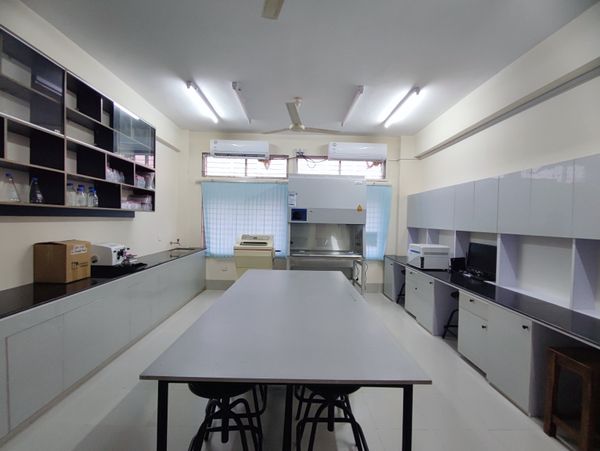
Specialized facility infrastructure establishing high-containment molecular diagnostics, RT-PCR genetic amplification, HEPA-filtered cleanbench culturing, and ultra-low temperature specimen bio-banking funded under the World Bank HEAT Project.
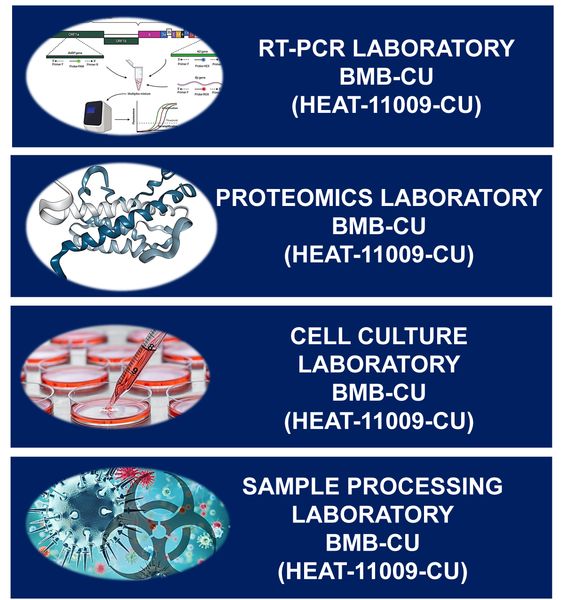
Official entrance signage designating the Higher Education Acceleration and Transformation (HEAT-11009-CU) molecular research suites, including RT-PCR, Proteomics, and Cell Culture facilities.
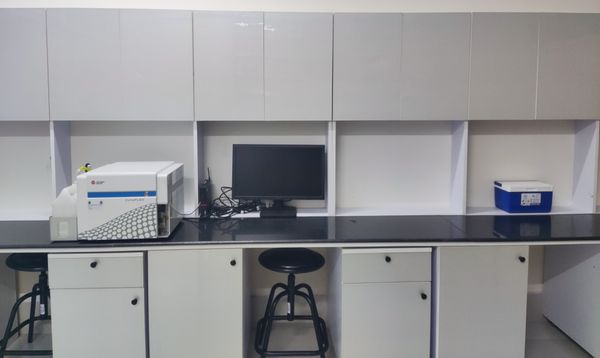
Dedicated PCR workstation configured for genetic amplification, target primer validation, and high-precision diagnostic assays for infectious pathogens.
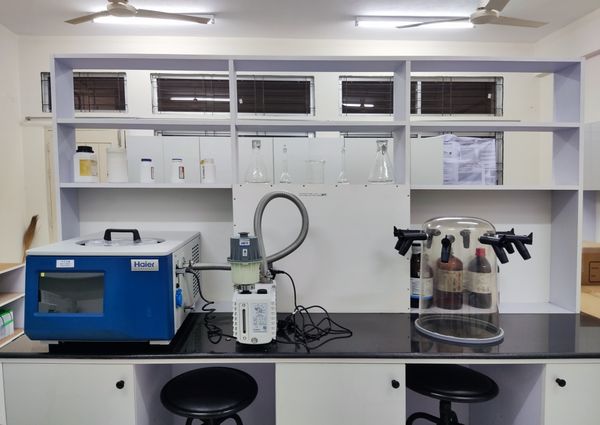
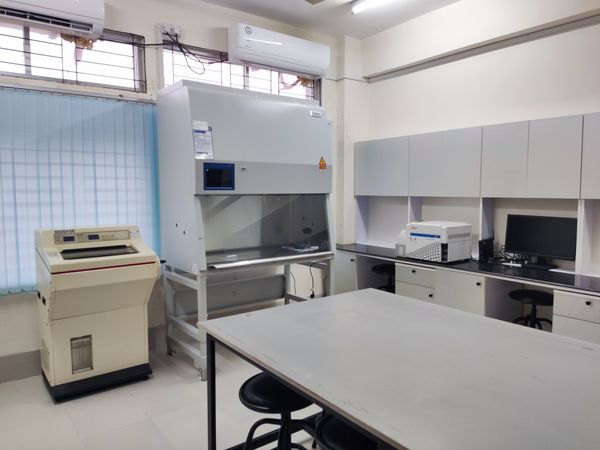
HEPA-filtered laminar airflow biosafety station providing sterile biocontainment for aseptic microbial inoculant culture and mammalian cell line maintenance.
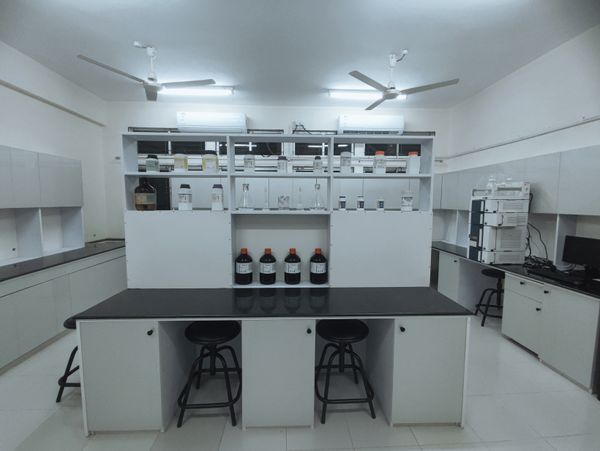
Submerged agarose gel electrophoresis tanks and programmable power supplies for resolving and validating PCR amplicons and RNA integrity.
Ultra-cold freezer infrastructure maintaining long-term repository integrity for microbial isolates, bio-inoculant strains, and clinical serum specimens.
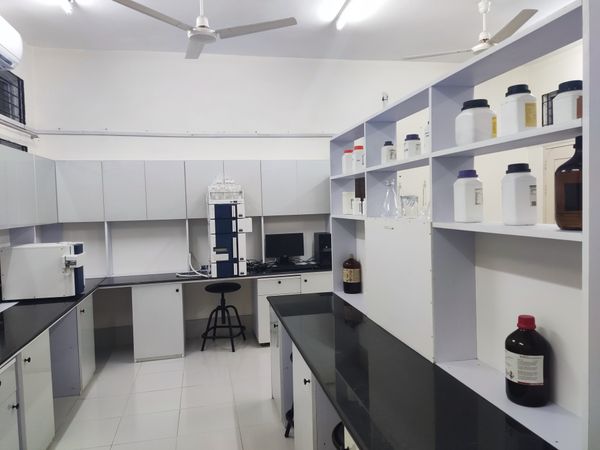
Core biochemical workstations dedicated to biomolecule fractionation, refrigerated centrifugation, precision buffer and elicitor weighing, and spectrophotometric protein characterization.
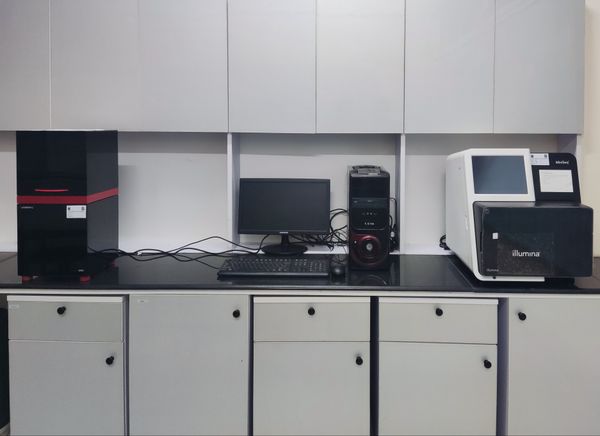
High-speed refrigerated centrifugation and microtube vortexing equipment for biomolecule fractionation, phase separation, and lysate clearance.
Precision analytical microbalance equipped with draft shielding for formulating biochemical buffers, culture media, and quantitative inducing agents.
Spectrophotometric and quantitative analytical setup for protein characterization, kinetic measurements, and enzymatic activity validation.
Live experimental field trials testing fungal inoculant formulations, continuous gravity-fed fluidic infusions, and aseptic tree-surgery sealing methods on Aquilaria agallocha specimens within the University botanical reserve.
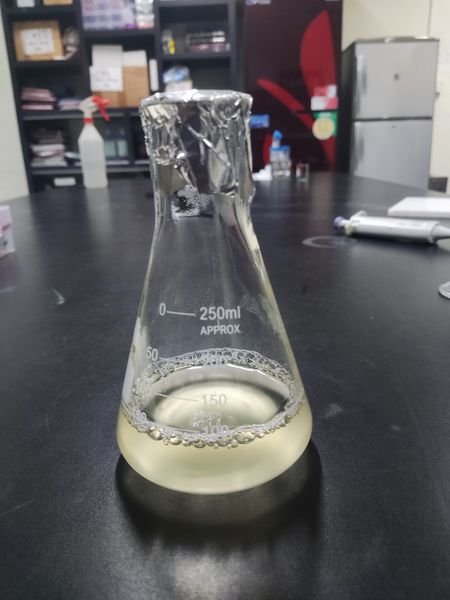
Formulating specialized fungal liquid broths and elicitor media cocktails prior to field-scale agarwood resin induction experiments.
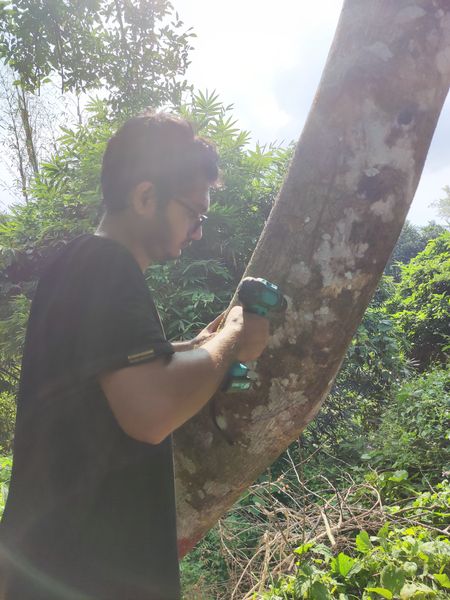
Custom gravity-assisted continuous delivery apparatus engineered to supply controlled bio-elicitor dosages into drilled trunk conduits.
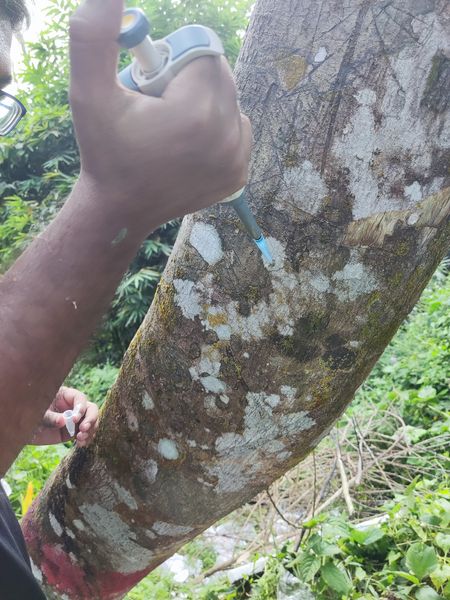
MSI Lab researchers working collaboratively on site to record tree diameter at breast height (DBH), GPS coordinates, and inoculant infusion volumes.
Comprehensive field expedition into the Chittagong Hill Tracts agarwood plantations, conducting mechanical tree boreholing, hanging multi-tier inoculant reservoirs, weatherproof sealing, and longitudinal specimen cataloging for GC-MS studies.
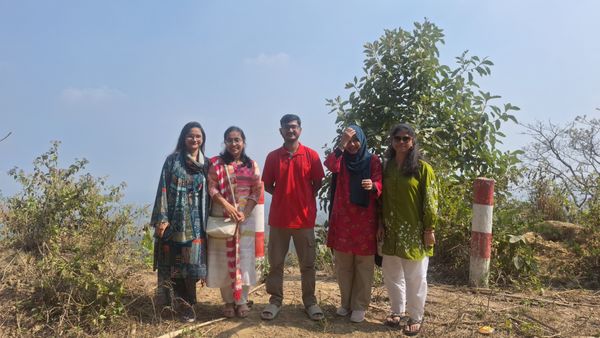
Suspended volumetric reservoirs supplying continuous microbial inoculants down through multi-tier vascular ports in remote plantation groves.
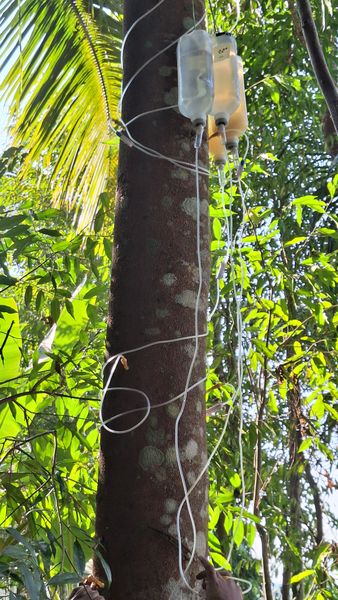
Systematic tagging and cataloging of treated specimens to enable longitudinal resin sampling and GC-MS chemical profiling over 3 to 12 months.
Dissemination of Master's thesis investigations on vector-borne viral biomarkers, RT-qPCR methodology, and epidemiological surveillance before the faculty examination board and scholarly community.
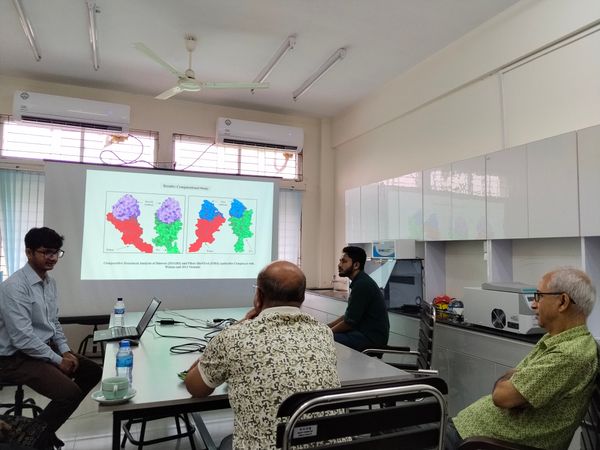
Oral research defense presenting epidemiological and serological findings on vector-borne viral infections, cytokine profiles, and prognostic biomarkers.
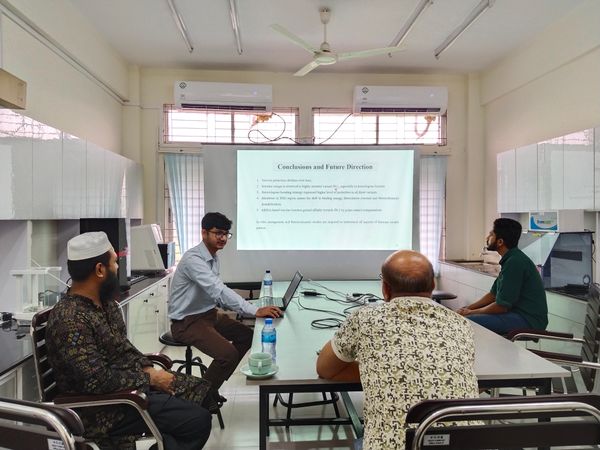
Panel summation reinforcing institutional research goals, inter-hospital clinical collaborations, and high-impact biotechnology directions for MSI Lab.
All images depict verified laboratory infrastructure, on-site biological inoculations, and scholarly defenses supervised by Prof. Dr. Mohammad Monirul Islam. Infrastructure funded under the Higher Education Acceleration and Transformation (HEAT-11009-CU) project at the University of Chittagong.
Description